


Retail today is more than selling — it’s about visibility. From the moment a product leaves the manufacturer to the second it’s scanned at checkout, retailers must track every step. Traceability ensures authenticity, prevents counterfeits, and strengthens consumer trust. And at the center of it all? Labels.
For many global brands, those labels are powered by ZPL (Zebra Programming Language) — the backbone of modern traceability systems. But as compliance standards tighten, the way retailers handle ZPL printing and validation is changing fast.
Here’s how forward-thinking companies are using platforms like ZPL.ai to stay ahead of supply chain complexity and data accuracy requirements.
The Rising Demand for Traceability
From apparel to electronics to pharmaceuticals, retailers are under pressure to track products at the unit level. Regulations such as the FDA Drug Supply Chain Security Act (DSCSA) and the EU Product Traceability Directive require companies to document the movement of goods across every node of the supply chain.
Traceability labels — containing batch codes, expiry dates, serial IDs, and GS1 barcodes — are now mission-critical. Without standardized label data, retailers risk compliance fines, shipment delays, or even product recalls.
ZPL remains a top choice because it provides direct control over how data is rendered on every label, across hundreds of printer models worldwide.
Why ZPL is Ideal for Retail Traceability
ZPL’s flexibility allows retailers to adapt quickly to changes in labeling standards without redesigning templates from scratch.
Key advantages include:
- Variable data fields: Easily integrate real-time batch or serial data.
- Barcode versatility: Support for linear and 2D formats (Code128, DataMatrix, QR).
- Printer consistency: Identical output on any certified Zebra printer.
- Error correction: Control over print density, alignment, and character encoding.
In traceability systems, milliseconds matter. ZPL’s efficiency means thousands of labels can be generated per hour — each tied to live inventory data through ERP or warehouse management systems.
The Traditional Challenge
Before cloud integration, traceability labels were often generated using on-premise tools or local drivers.
This caused bottlenecks such as:
- Delays in updating templates across multiple store locations.
- Inconsistent printing between 203 and 300 DPI printers.
- Manual quality checks and reprints due to misalignment.
As retail networks expanded, centralized control became impossible without new infrastructure.
The Cloud Shift with ZPL.ai
ZPL.ai reimagines how traceability is managed by moving label design, validation, and rendering to the cloud.
For large retail chains, this means:
- Centralized management: All label templates and printer settings live in one place.
- Real-time rendering: Instantly preview ZPL outputs at any DPI before printing.
- API integration: Connects with SAP, Oracle, or custom POS systems for automatic printing.
- Audit-ready records: Every printed label is stored and timestamped for compliance.
Retailers no longer need to rely on local installations or manual updates — everything is accessible via a browser.
Real-World Application
One global fashion brand implemented ZPL.ai across 120 stores to manage traceability for luxury accessories.
The results were striking:
- Label design time dropped by 60%.
- Product-level trace data synced automatically from their ERP.
- Store employees no longer had to manually test printer alignment.
Within a month, compliance audits that once took days were reduced to hours — all because label validation became centralized and transparent.
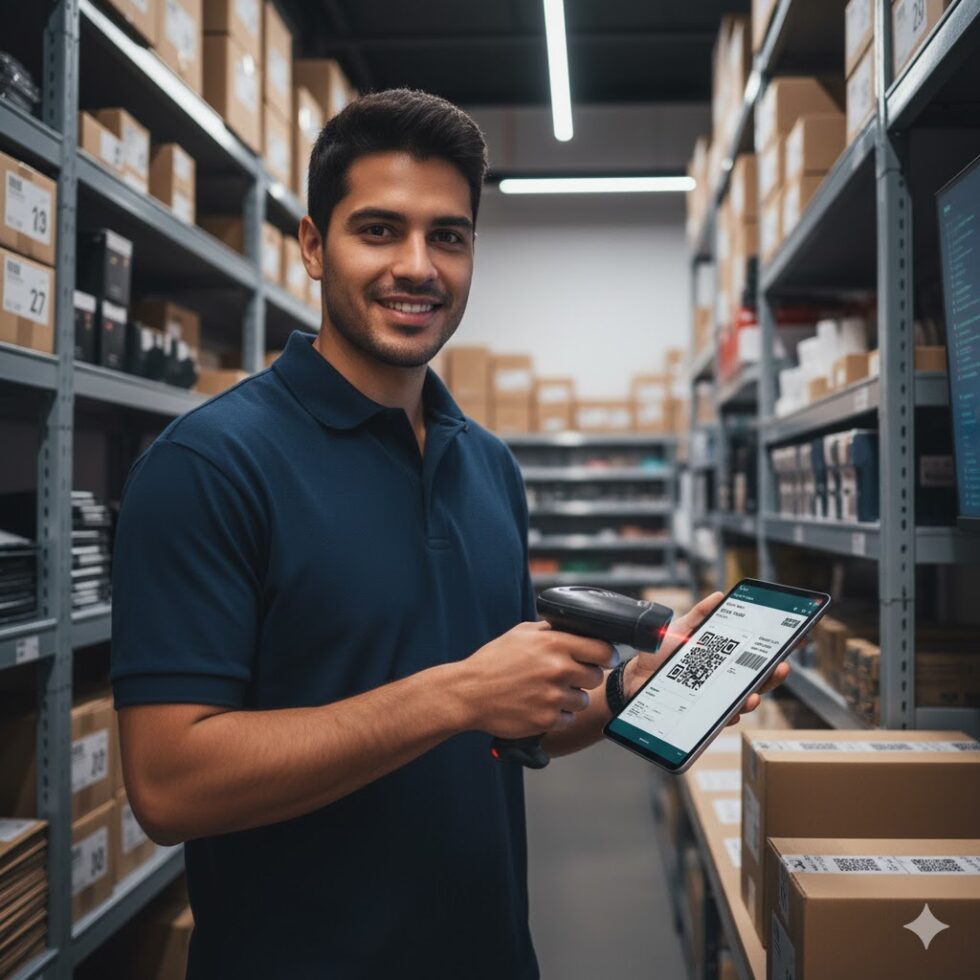
Data Integrity and Brand Protection
Beyond compliance, retailers are using ZPL to enhance authenticity and brand security.
Embedding trace codes and encrypted barcodes directly within ZPL templates allows seamless verification at every checkpoint.
ZPL.ai takes this further with automatic label verification. When a label is generated, the system validates that all encoded data matches the inventory source — eliminating mismatched or fraudulent codes before printing.
Final Thoughts
Retail traceability isn’t just a regulatory necessity — it’s becoming a competitive advantage.
Brands that invest in transparent, real-time labeling systems can identify issues faster, cut costs, and strengthen customer trust.
By combining the precision of ZPL with the scalability of cloud tools like ZPL.ai, retailers can move from reactive compliance to proactive intelligence.
Before deploying your next product label, validate it with the zpl viewer to guarantee accuracy, compliance, and brand consistency across every retail location.